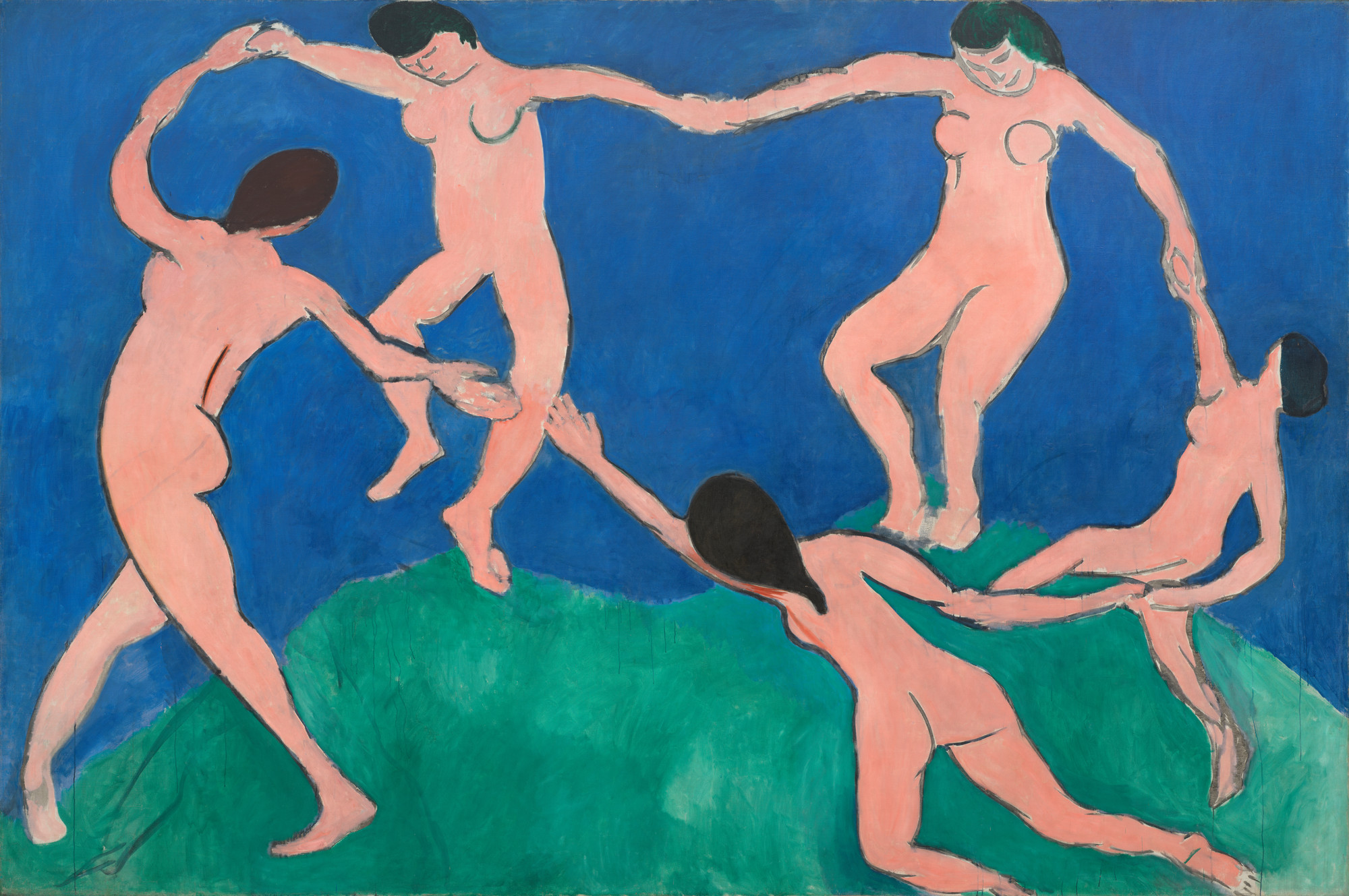
“We look at the dance to impart the sensation of living in an affirmation of life, to energize the spectator into keener awareness of the vigor, the mystery, the humor, the variety, and the wonder of life. This is the function of the American dance.”
– Martha Graham
“It’s too early for whatever this is.”
– Bailey
While Motion is ultimately a story being driven by the Bodies, in Energy we will deconstruct the vehicle’s engine, identifying some of its most key components.
the distance between SENA AND QUINN
As the pilot illustrates, it is clear that a vast, unseen void lies between our two protagonists and while there are hints of what lies at its root, its genesis remains a mystery. As we progress through our first season and Sena and Quinn are continuously forced to confront each other through the realities of their shared, competitive environment, we will also gradually excavate the major notes of their history to discover how the challenges they face are not merely professional in nature, but rather deeply personal.
Ultimately, as they experience their own growths, so too will their relationship change with them and, by the end of our first season, we will witness a significant collapse of this distance. However, as the series continues to progress onwards, we will see their relationship undergo a rotation of general ebbings and general flowings. It will be this Motion, this constant cycle of distance and proximity that will allow us to ask one of the fundamental questions that lies at the root of our series – what is it that brings us together? What is it that pulls us apart?
Their relationship is destined to be constantly plagued by the tiny misunderstandings that lead to hurt, distance, and disappointment. And even when they learn to resolve that, and the timing becomes right for one, it will not be right for the other and then when the timing becomes right for the other, it will no longer be right for the one.
But there will come instances of quiet victory as well; rare moments of cathartic and deep connection where, even if it is with the bittersweet awareness that even if it is just for a night or a single dance, they will allow themselves the brief enjoyment of finally being on the same page as the other.
Theirs is a unique relationship derived from a longstanding history and so, naturally, their love is a complex thing. On the surface, it might take the shape of a yearning ‘will they won’t they,’ on other levels, their communication can be seen as a Shakespearean comedy of errors or an eternal reminder of the fact that, even when you are the closest you have ever been to someone, there will always be differences, no matter how small, that separate you from them. Ultimately, theirs will be the tragedy with a happy ending.
As children, Sena and Quinn grew up in different neighborhoods within the wider Chicago area and so they attended different schools, at least for math, English, and general education. The classroom they did first share, however, was a small dance studio for children’s ballet.
As all children tend to be in new environments, the class of ten was shy around the other but it wasn’t before long that Quinn, brave and slightly impetuous, became the first to emerge from her shell. In combination with her taking to ballet as a fish does to water, the other children couldn’t help but look up to her and, unsurprisingly, she was silently elected to the position of class ringleader, a role she also seemed to be naturally fit for.
However, as time went on and the social dynamics began to take on further definition, it was apparent that one child seemed to always be on the outskirts, the quiet Sena. When others tried to speak with her, she would respond with very few words and in a volume barely above a whisper. Some others couldn’t understand why she communicated this way, why she wouldn’t yell or shout or play like the rest of them and, as it tends to go with not just children, but people of all ages, they began to resent her for their own lack of understanding. They interpreted her reserved nature as that of a rejection of their own and so Sena’s position as the outsider began to be used against her.
What started as small rollings of eyes eventually grew into careless, cutting words, and then, not long after, came the blossoms of more vocal acts of exclusion. Unaware of the fact that they were using their mutual antagonism of Sena as an adhesive to further strengthen their own bonds, one particular split-faction, a group comprised of three girls, cultivated these sentiments with a special kind of zeal. It was after the eventual witnessing of one particularly cruel act – something of which the idealist in her couldn’t ignore – that Quinn, incensed, rushed to Sena’s aide. Through her protection, the trio left Sena relatively alone.
Quinn, having discovered the initial satisfaction that comes from doing the ‘right’ thing, vowed to take on an especially protective role over Sena. However, as Sena continued to remain relatively non-verbal despite Quinn’s best efforts, Quinn’s feelings grew in complexity. Who she once viewed as a kind of ward became closer to that of a burden, a weight that slowed her down as she began to wordlessly but consistently appear in every activity or interaction Quinn seemed to be involved in. Over time, the renegade faction took advantage of this too and used Quinn’s protective role as a platform to chip away at her standing with the others, diminishing her social power while enriching their own.
While this too stoked the flames of her growing resentment towards Sena, after accidentally witnessing Sena commit an act of methodical and silent retaliation upon her bullies, the fire disappeared altogether as Quinn became delighted in the realization that this silent girl didn’t need to be protected. Who she once believed to be nothing less than the source of all of her social troubles became a source of fascination, and not long after, a source of genuine delight and love.
As they grew, they continued to dance. Quinn with a pure and ever childlike love, maintained her position at the top of the class and Sena, with a complex passion marred by the forces of parental pressure, managed to join her there after some time. As the best dancers amongst their class they were the ones earmarked for further investment and, at fourteen, with the help of a scholarship for Sena, they were both sent off to a summer program at one of America’s best dance schools, Jacob’s Pillow (a real place, I didn’t choose the name). There, and for the first time, they were exposed to something larger waters and experienced all the magnitudes that came with it.
For Sena, this expansion took on the shape of fear. She was intimidated by just how intense the people were and was shaken by the fact that, in the span of one single day, she seemed to go from the top of something to the very bottom of it. She was scared, not just by the fact that what she considered to be familiar became unrecognizable, but rather with how quickly and suddenly that change occurred. In her conversations with Quinn she took solace in the fact that she also seemed to share the sentiment of being overwhelmed but what she didn’t fully comprehend was how Quinn was actually strangely comforted by the feeling.
To Quinn, this expansion took on the shape of love. To her, it was a wonderful realization as she found that what she delighted in simply became more. More to explore. More to discover. More to love. She didn’t realize it before she got to this place full of people who were just as passionate and, in some cases, just as talented as her, but she was feeling lonely.
As the program continued on for the summer, Sena became increasingly withdrawn and increasingly reliant upon Quinn and Quinn, in much the same way as when they were kids, came to view Sena as a burden again. The foundations of their relationship continued to be shaken by the magnitudes of their contrasts and it was here that, for the first time in their relationship, Quinn drifted away.
This separation, while not necessarily a full break, was still an emotional distance that remained long after they returned from Jacob’s Pillow and, as college came around, it took on physical definition as well with Sena attending USC’s Glorya Kaufman School of Dance and Quinn taking on Juilliard.
However, as we know, they were always meant to come back to each other and so they did. As they graduated and auditioned for various companies, they each placed a special emphasis on Wolf Street. For Sena it was the company closest to home and for Quinn, ever since she was young, Wolf Street had a reputation as being one of the best contemporary companies in the nation. It also didn’t hurt that it was their production of Lyra’s “Tempestuous” which inspired Quinn to take that first ballet class all those years ago and, ever since, she’d always harbored the dream of one day conquering it.
Quinn marveled at the way Sena had grown from the shy, somewhat insecure person she once knew her as and Sena was fascinated by the way Quinn hadn’t seemed to have changed at all. By the time they were both accepted into Wolf Street, their friendship was stronger and more intimate than it had ever been. Supported by the foundations of their childhood friendship, they each reveled in their newfound appreciation of the other through their more complex adult lens. They respected each other as athletes, artists, competitors and, although they never seemed to address what it was that split them apart in the first place, it seemed that they began to slowly love each other as something more.
However, as they were subject to all the turmoils that naturally hallmark the transition era of young adulthood, their feelings were complicated by other struggles. Confused, they silently navigated the question of who they were and who they wanted to be, not just to each other, but to themselves as both dancers and people. And while it was the sharing of this confusion that somehow made their relationship even stronger, it was also this confusion that prevented them from taking the steps necessary to confront these new, deeper feelings they seemed to share for each other. After all, how could they know that what they were feeling for the other was real while they were still trying to figure out what they were feeling about themselves? And so, Sena, scared to lose the friendship and Quinn, scared to lose something else, danced around this feeling for a number of years.
It wasn’t until one night, at some party, when Quinn witnessed Sena being wooed away by someone else that, emboldened by one too many shots of Malibu and compounded by her already impulsive nature, she took Sena by the hand and they left the party. It was there, for the first time in their relationship, they acted upon their feelings and in the way that dancers do best, with simple body language.
And so they entered yet another arc of their relationship. Sena, having realized early into her Wolf Street career that this is what she wanted, at least as it pertained to romance, was happy to simply be with Quinn in this way and Quinn shared that feeling, at least at first
For Quinn, as she grew increasingly frustrated with her lack of success in becoming the undeniable best at Wolf Street, the seeds of a deep fear began to take root within the soil of her spirit. As they sprouted and eventually came to bear their bitter fruit, Quinn came to once again resent the weight of Sena’s increased attachment upon her, blaming it for her own failure while also harboring a silent animus towards Sena’s inherent position as a competitor. It was in one practice, when Sena tried to help Quinn by talking her through a piece of choreography that Quinn shattered. It wasn’t a big fight but it was a fight and, in its wake, Quinn used the dust kicked up as the cover needed to run away. And so as time beats ever onwards but with a strange inevitability also leads one back, it was here that, for the second time in their relationship, Quinn drifted away.
Over the course of the next few months, and wallowing in her own shame, Quinn detached herself from Sena. Distancing herself as best she could despite the close proximity of their work and unknowingly becoming a worse dancer all the while. Despite her own shortcomings with communication and confrontation, Sena tried to salvage their relationship, nobly struggling with texts, letters, and, at one point, even asking Quinn outright. However, it takes two to tango and while Sena tried her best, each attempt still resulted in her being left alone and deserted on the dance floor.
It was not long after this rift began that her brother died and it is not long after his death, about two months to be exact, that we meet our characters for the first time.
Lorem ipsum dolor sit amet, consectetur adipiscing elit. Ut elit tellus, luctus nec ullamcorper mattis, pulvinar dapibus leo.
THE repertory
As the first season will focus largely on Sena, Quinn, and other core Movers, the repertoire of Wolf Street will function as much of the protein behind the day-to-day challenges. But let it never be forgotten that how a thing is said is just as important as what one is saying and so, Motion’s narrative will approach these pieces of choreography as opportunities to catalyze the characters, presenting an emphatic focus on the thematic exploration of a piece as opposed to any potential technical obstacles of a given phrase of choreography. If a piece of choreography demands the performer fall and they find themselves unable to execute with satisfaction, we will focus on the nature of fear and letting go before we ever come close to discussing how, technically, a fall is best done with the thighs flexing to soften the landing which would also coincidentally allow one to pivot into the next position where they need to raise their- and so on and so forth. Furthermore, given the contemporary nature of the company, the influences and work staged at Wolf Street will have the added benefit of not only being hyper-specific but intensely cross-cultural. Whether it’s understanding trance mentality through a piece influenced by a Detroit warehouse dance style or a modern interpretation of a classic Russian ballet, the potential avenues of thematic exploration are inherently limitless.
However, that is not to say all of the work performed will happen strictly within the walls of Wolf Street. Occasionally, throughout our first season (and with increasing regularity across each subsequent one), episodes will venture forth and out into the world to explore dance in the other venues in which it occurs, from the most vivacious productions of an Indian wedding to the private stage of one’s apartment as the night wears on and a quiet feeling begins to settle in. These instances and the resulting arcs will provide us the space necessary to not just perform targeted personal character explorations but, through the inevitable return to the competitive realities of Wolf Street, allow us to further illustrate all of the ways in which dance is more than just a profession or even simple action.
the games
Whether its by a single person, equipped with a smooth, flat stone and a desire to break their personal record of number of skips across a pond or an oozing pile of politicians trying to score points with their base by hitting the right buzzwords in a debate, individual or collective, physical or invisible, wherever there are people, there is desire and where there is desire there is a Game.
While the Wikipedia page on behavioral game theory explains this concept more efficiently but in its own flavorless way, as a narrative, Motion aims to show the concept of Game and it’s broader aspects by embodying it on a number of levels. On the most broad architectural level, Motion will explore a specific, unique perspective and accompanying style of game with each season, thus evolving our own understandings of game to Game in much the same way that The Wire was able to. On a more retracted level, Game will manifest, through a series of constant competitions, some being contained by a singular episode while others will span across a larger arc or season. On an even smaller scale still, the immediate narrative lens of Motion will focus on some of the core aspects to Game, identifying the nature of the specific game at hand as well as who is playing, how it is they are playing it, and what it is they are playing for. This latter approach will ultimately present not just the psychological profiles of the competitor, but the very philosophies they each embody as they pursue what it is they are missing.
However, as a gun without a bullet or a joke without a punchline, it is important to remember that these illustrations of Game only achieve thematic meaning when utilized in concert with the concepts of victory and loss.
where STADIUM meets CHURCH – the game of dance & the realizations of the “state”
While there are no immediately defined rules or points system to the game of dance there is still a simple truth to the fact that, in a room full of people auditioning for a production of Carmen, only one can ostensibly ‘win’ the titular role. So, in the face of a challenge such as this, how does one achieve that victory? Do they click their castanets the loudest, the most on time? Do they execute the choreography perfectly and down to the second? Do they wear an outfit that is just red enough in the hopes that the person casting it subconsciously associates them with Carmen a little more than they normally would? While these approaches do contain their own varying degrees of validity, they are misdirections, emphases placed upon the smaller aspects of what is ultimately a larger and more singular objective.
There is a certain kind of elasticity of reality that permeates Motion’s pilot, from fingers flickering under dull bathroom lights to mirrors reflecting images of self-immolation. These moments are part of a developed system of surreality (henceforth known as the “State”) that seek to not just represent the emotional realities found within a character, but rather illustrate the abstract truths found within dance as a game being played at its highest level. The State is nothing less than what separates a good performance from a great one, it is the very line of being that, when crossed, results in a nameless auditioner becoming the conduit of Carmen’s undiluted spirit, adopting all of her passion and all of her fire. Through the level of depth and intensity of the State’s manifestations will Motion be able to directly present the game of dance.
Although the pilot was written to carefully and methodically present all of the major rules to the State, as this is Motion’s bible we will present them below, directly, explicitly, and as its own set of commandments.
- The State is always in line and derived from character truth, strongest in the wake of character epiphany and weakest in moments of character stagnation.
- By the State’s depth is the performance great, by its consistency is the dancer great.
- The Movers strive to attain the State, the Shakers seek to harness it. In one form or another, all in Motion are caught in its pursuit.
- All can observe the State, but can never explain or define exactly what it is they saw outside of the body moving within.
- The State is objective. One can say the sun is not bright but still feel the need to shield their eyes against it.
- The State is made manifest through the mere evocation of dance. It can be called forth in extensive choreographic sequences or in the quarter-second where a step becomes a skip.
- Each person’s relationship to the State is their own. Over time, we will be able to witness recurring motifs, elements, and effects specific to the participant.
- A singular instance of the State is never to exceed two minutes in length unless used within the context of a larger dream sequence.
- The State is kin to the musical but only kin. It can happen spontaneously and in the outer world but there will be no singing and no crowds. If anyone from the outer world is going to participate they will do so briefly, no more than one at a time, and will function as a kind of thematic prop. If the mailman bursts into an elaborate, professional grade tap dance they will be hit by a bus two seconds later. It doesn’t matter if they’re inside and on the third floor of an apartment building. That bus is coming and it will get them.
- In its most bare essence, the State is the result of the subconscious competition that takes place between one and oneself.
Functioning as the main game to Motion’s first season as well as acting as a spinal component to the series at large, the silent exploration and unified narrative focus of the State will be the very element that not only allows us to witness the hidden inner selves of a given character but also provide our audience with a more individualized and active viewing experience. Some may wish to be judges or interpreters of the meanings behind a given manifestation, the verbal silence may inspire some to solve the implied mystery of its system, others might be simply content to witness the general spectacle of it all. Regardless, whether it is to catalyze a character within or engage the audience without, the general importance of the State to Motion is critical and cannot be emphasized enough.
Based solely off the amount of text alone, it is clear that the Energy of Motion is not sourced from a simple magical, metal block but rather from the combustion generated by a complex, multi-stage engine that does just so happen to resemble a metal block. However, it is here that I will remind myself, you, and the world at large that more than anything on this page, it is the story itself which functions as the ultimate uniting vehicle of all of these concepts. A million words from a bible and a nickel will still only get you a cup of coffee.
If you are as exhausted of words by now as I am, let us both take solace in the fact that the next page is designed to focus more on the pictures than the paragraphs.